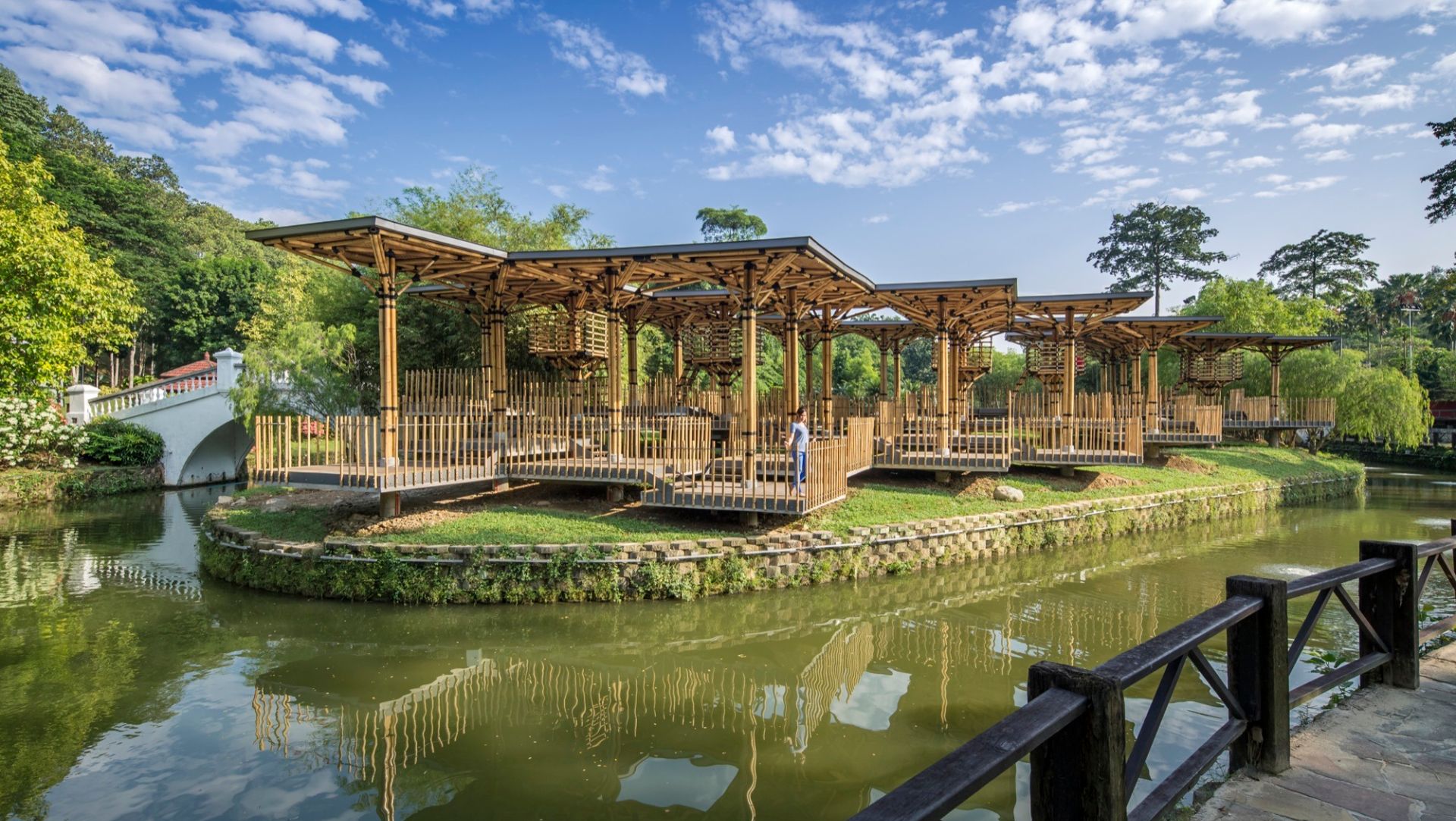
The Bamboo Playhouse is a highly acclaimed public pavilion in Perdana Botanical Gardens in Kuala Lumpur, Malaysia. This playful bamboo structure, designed by Eleena Jamil Architect, demonstrates the potential of a simple natural material to provide shade, beauty, movement and public value. For a construction company in Marbella, the project offers useful ideas for outdoor living, garden pavilions, resort spaces, and sustainable building design.
What’s the Bamboo Playhouse in Kuala Lumpur?
The Bamboo Playhouse is a public pavilion made of bamboo, completed and opened to the public in 2015, and located on a small island within a large lake in the oldest park in Kuala Lumpur. The nearby botanical garden provides the building with a serene environment, with the pavilion situated within the garden landscape among water, plants and lovely greenery.
As per the project description by Eleena Jamil Architect, the playhouse is inspired by the ideas of Malaysian culture and traditional village shelters. The building was conceived as an open building, where people can relax, explore and enjoy the views across the lake.
Quick facts
| Feature | Detail |
|---|---|
| Project | Bamboo Playhouse |
| Location | Perdana Botanical Gardens, Kuala Lumpur, Malaysia |
| Architect | Eleena Jamil Architect |
| Type | Public pavilion |
| Main material | Bamboo |
| Setting | A small island in a large lake |
| Key idea | Playful three dimensional floorscape |
Design Inspiration by Eleena Jamil Architect: Traditional Vernacular Structures
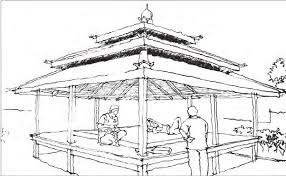
The Bamboo Playhouse is inspired by traditional vernacular structures called wakaf. The small public shelters were originally found in Malaysian villages, where they provide shade for people to rest, meet and converse.
Often these vernacular structures featured simple roofs, raised floors and open sides. The Bamboo Playhouse is a modern take on that concept. Eleena Jamil chose not to copy the original form, but rather to let the playhouse stems from that vernacular inspiration shape a more lively public space with height, movement and layered platforms.
This is important in contemporary building because design must be sensitive to place. In Marbella, the same lesson can be translated into shaded terraces, pergolas, courtyards, timber screens and garden rooms that are appropriate to the Mediterranean climate.
The construction and experience of the Bamboo Playhouse in Kuala Lumpur’s oldest park.
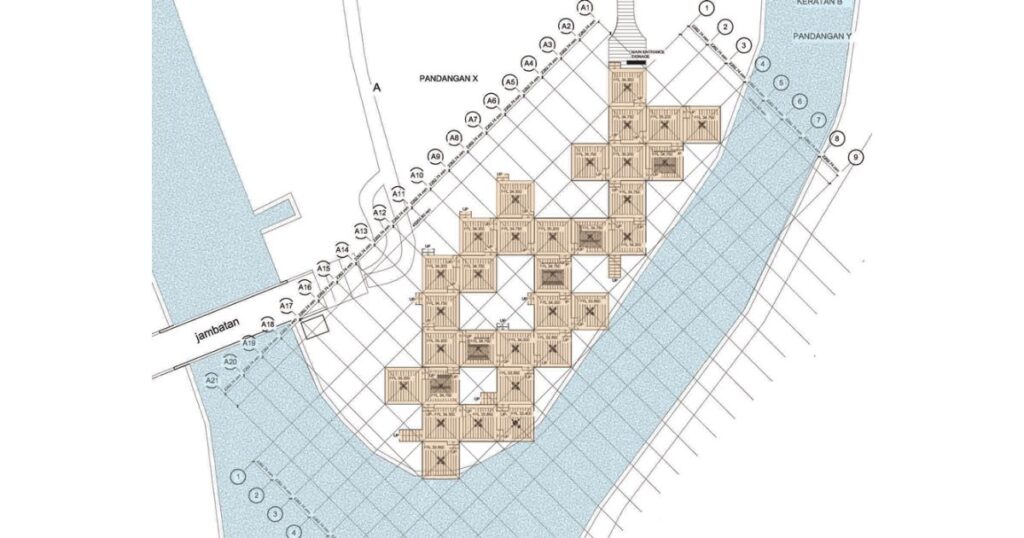
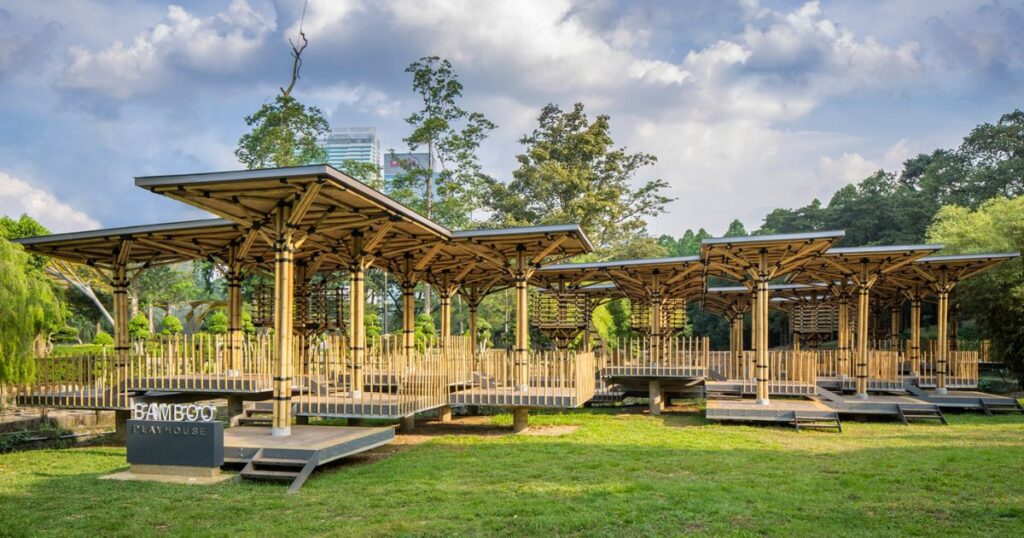
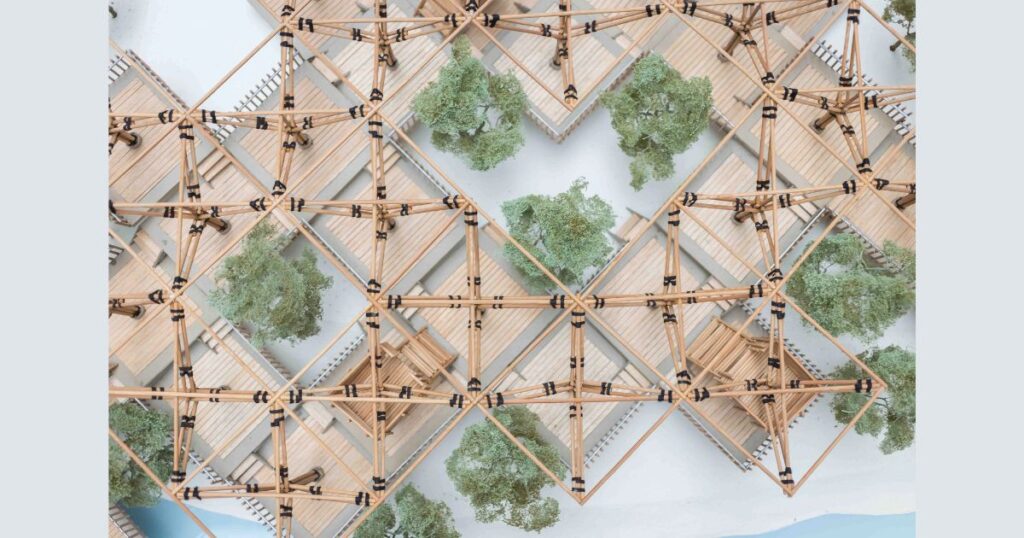
The pavilion is made up of thirty-one identical square decks, covered spaces and characteristic bamboo baskets. The different elements are set at seemingly random heights, giving the impression more of a set of small tree houses than a formal public building.
This results in a playful three-dimensional floorscape. Visitors don’t just pass through a flat pavilion. Rather, they ascend and descend, traverse and orbit the structure. Consequently, the project is active and social.
The open structure also allows for natural ventilation. The air circulates through the pavilion, and the roof offers shade and some protection from the weather. Hence the design is a response to the warm and humid climate of Kuala Lumpur.
Why Bamboo Works as a Sustainable Building Material
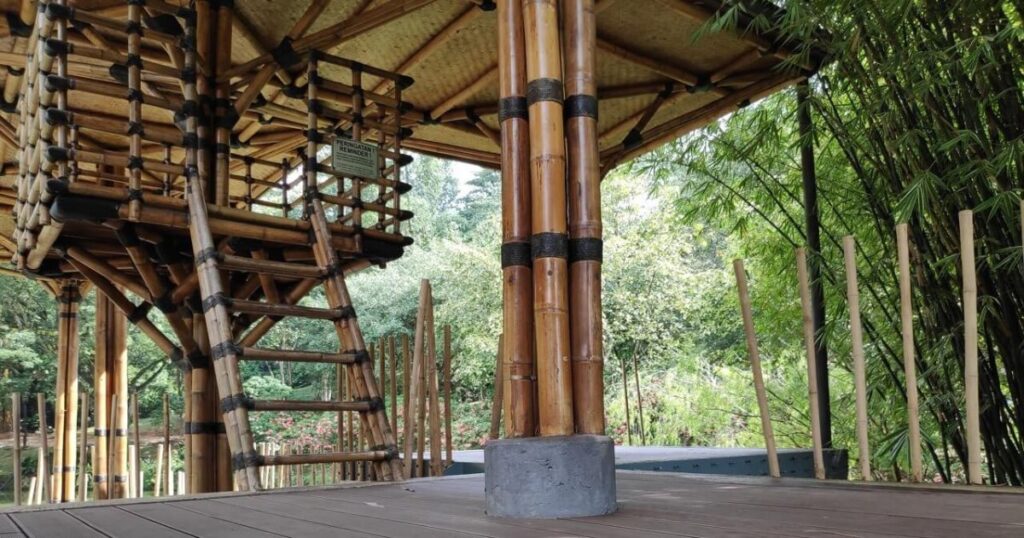
Bamboo is a fast growing, carbon sequestering, and treated bamboo can provide good structural performance, which is why it has become a popular material in sustainable buildings. The bamboo species mature in about 3-5 years, which is much earlier than many hardwood species.
Bamboo is not however a magic material. Should be selected, dried, treated, detailed and maintained properly. If these measures are not taken, moisture, insects and sun exposure can shorten its life.
The advantages of using bamboo in building construction
- Quick growth: Bamboo grows faster than many timber species.
- Strength, if made right: It can offer reliable structural support and good durability.
- Low visual impact: It blends harmoniously with gardens and natural sites.
- Warm appearance: It has a texture that adds character and softness.
- Flexible use: can be used in roofs, screens, pavilions, railings and decorative structures.
Bamboo is rarely used in contemporary Malaysian buildings, which makes this material choice especially notable.
The World Bamboo Organization is a good source of technical details about bamboo as a material.
Why the Bamboo Playhouse Blends Harmoniously With Nature
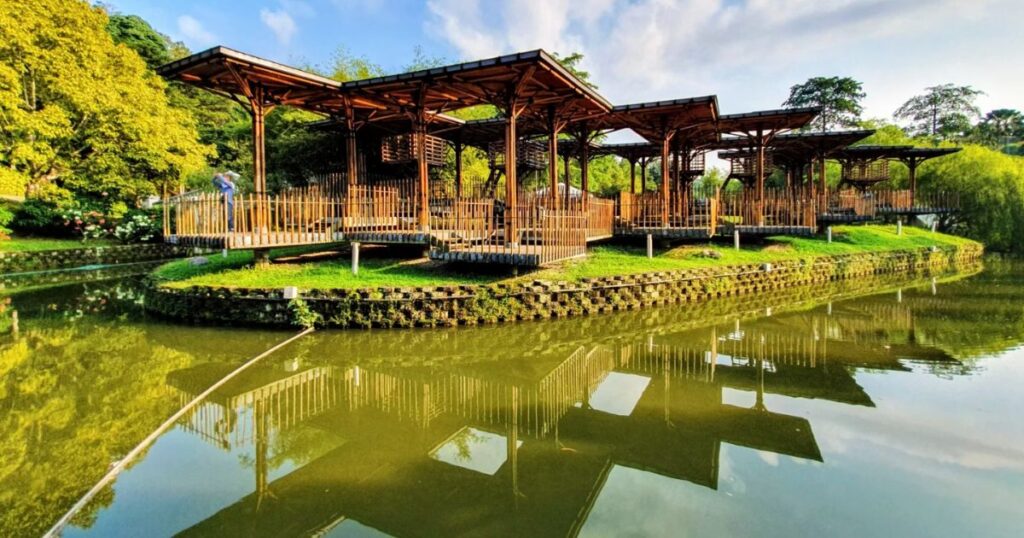
The Bamboo Playhouse is not a site that is overpowering. Rather, it blends harmoniously with the lake, island, trees and garden paths. It is light in its bamboo structure and the raised platforms enable views to pass through.
The pavilion is an experience and not a thing, it is a journey that traverses the site. This makes visitors feel connected with the water and the way the lake stretches beyond the platforms. Moreover, the natural colour of the structure harmonises with the beautiful greenery.
This is a fundamental building principle for landscape-led building. A pavilion, pergola or garden structure should not be “stuffed” into a site. It should enhance comfort, frame views and provide a motivation to be outside.
Lessons for Marbella Construction Projects
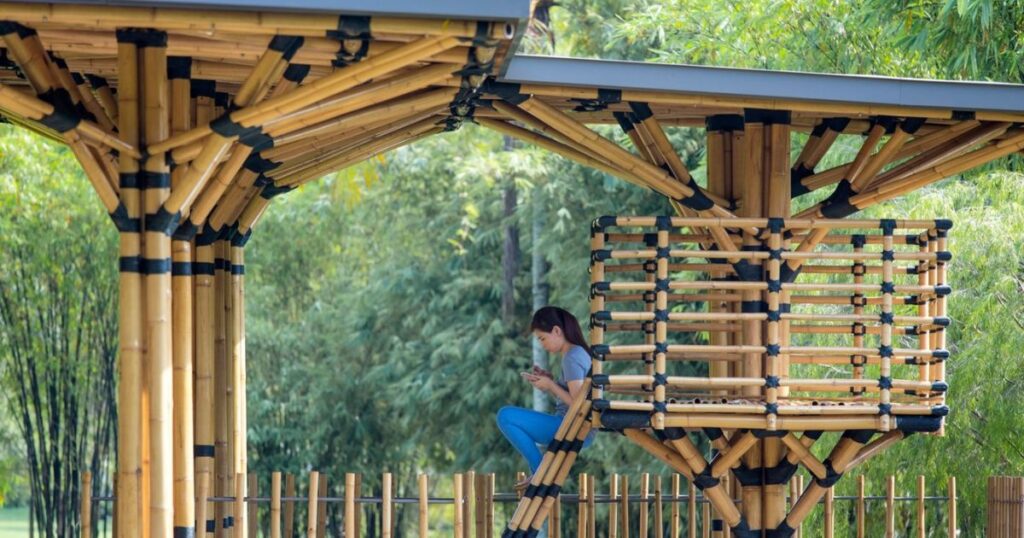
The Bamboo Playhouse is located in Malaysia, but its concepts can be applied to construction in Marbella. The content of the material can vary, but the design concepts are applicable.
1. Design for shade first
Shade is a key element in Marbella’s climate. Pergolas, timber pavilions, cane screens and deep roof overhangs can help lower heat and enhance comfort outdoors.
2. Use natural materials carefully
Warmth can be added with bamboo, timber, natural stone, lime finishes and clay tiles. However, every material should be appropriate for local codes, fire regulations, weather exposure and maintenance requirements.
3. Link buildings with gardens
Plants, pools, courtyards and views are better when framed by outdoor spaces. A Marbella pavilion should complement the landscape, just as the Bamboo Playhouse does.
4. Develop adaptable public/private areas
Garden pavilions can be used for a variety of purposes, such as hosting guests, providing shade for the pool, relaxing, yoga, or for children’s play. Good design enables multiple activities to be carried out in a single structure on a day to day basis.
Will a Bamboo-Inspired Playhouse Work in Marbella?
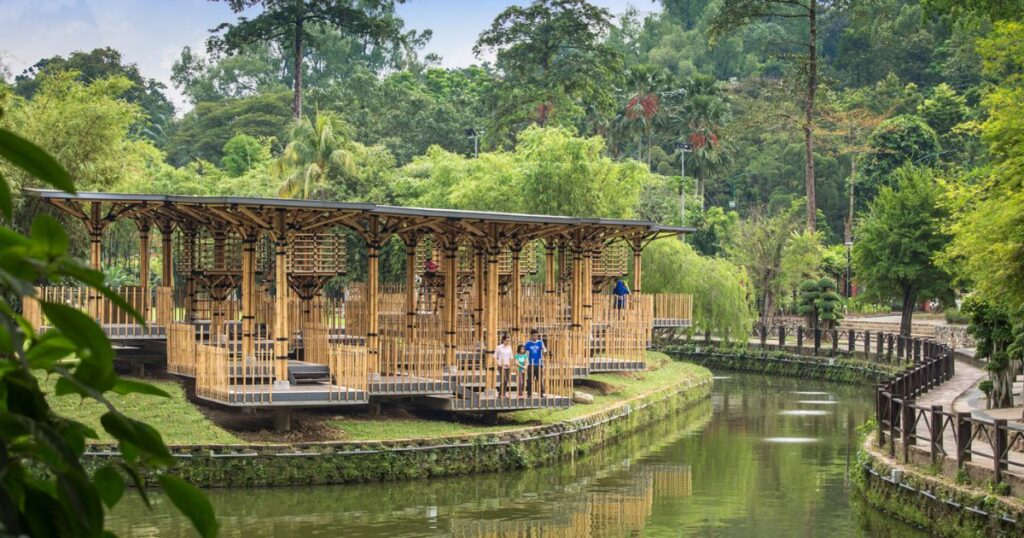
A bamboo inspired playhouse or pavilion could work in Marbella when treated as an adaptation of a public pavilion located in a lush garden setting rather than a direct copy; the aim is to create something more animated and to shape a shaded centre for outdoor life. Some decorative or shaded structures could be suitable for direct use of bamboo, but for other projects, treated timber, engineered bamboo, glulam, steel-and-wood hybrids, or reed screens may be more appropriate.
A construction team would have to research:
- Exposure to the sun and shade patterns
- Structural support and wind loads.
- Drainage and foundations
- Fire safety and building regulations
- Treatment and long-term care of materials.
It is not about copying the idea, it is about adapting it, for a company like Marbella Constructions. The objective would be to develop sustainable outdoor spaces that are natural, durable and appropriate for living in the Mediterranean.
Final Thoughts on the Bamboo Playhouse by Eleena Jamil
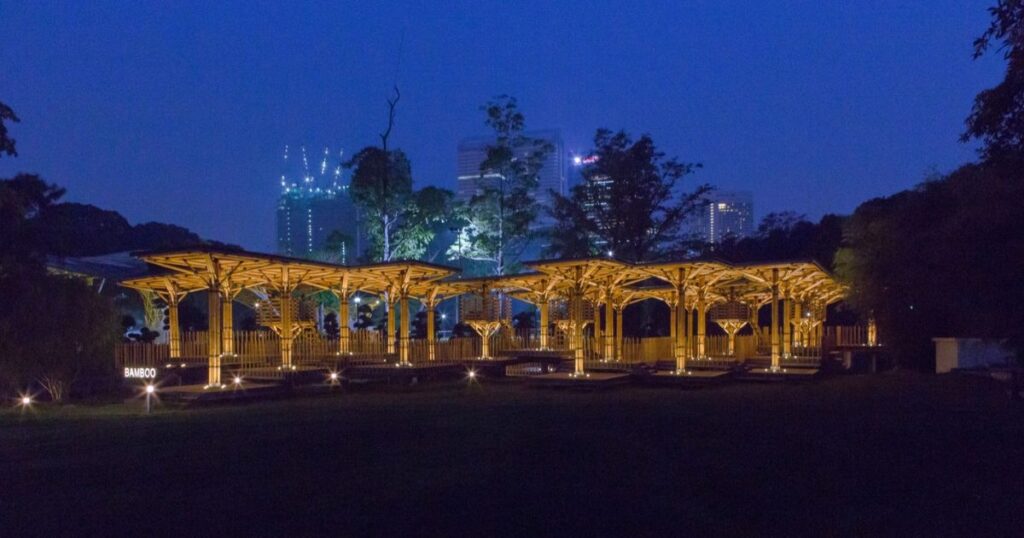
The Bamboo Playhouse demonstrates that a public pavilion can be simple, cultural, playful and sustainable all in one. It is a humanizing of public space through its bamboo baskets, raised platforms, open structure and garden setting.
The project is a clear lesson for Marbella: outdoor buildings must offer shade, the use of thoughtful materials and the connection of people with nature. The Bamboo Playhouse is still a good illustration of the light, functional and memorable design that is sustainable.